

The Solo Hackathon Problem
The last 10% of hackathon joy comes from the parts AI can't replace

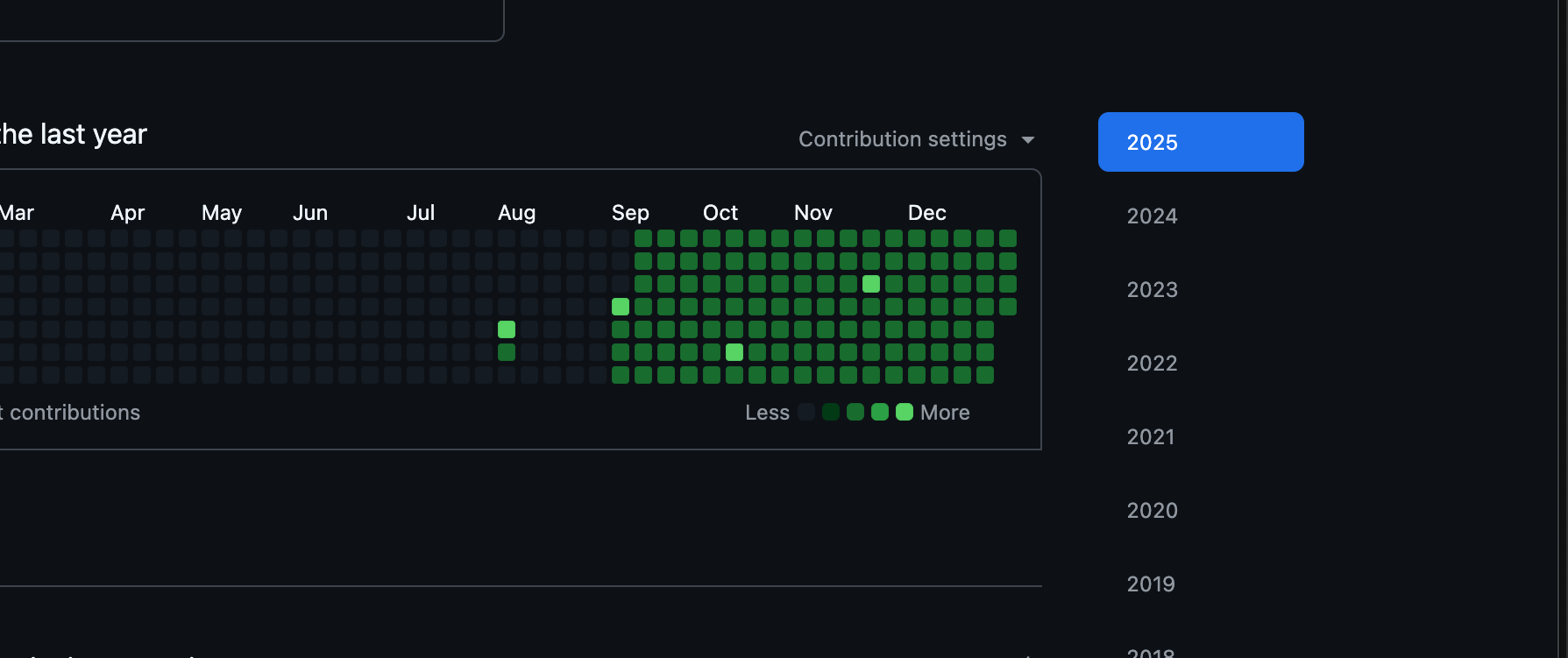
Can you tell when Claude Sonnet 4.5 entered my life? My GitHub looks like I got replaced by a one-person hackathon machine, where an idea hits at lunch and by dinner I’m deploying to Vercel. I’m building lightweight versions of products I’d otherwise pay for(because why not), exercising my systems design skills in ways I never could before, making things that scale and that I can maintain(hint hint: write tests, please). The creative satisfaction is real, and it feels like when the internet first showed up and our collective unfiltered excitement of “holy shit, I can build anything now.”
Most folks who know me know that I’m obsessed with hackathons. I have traditions around them, but I’ll spare you the embarrassing details. My partner and I do family hackathons because we’re a bunch of nerds. I’ve participated in more weekend coding marathons than I can count, and it’s not (entirely) for the pizza. I suspect it’s for “the experience”?
Real hackathons create culture in ways that solo building sessions don’t. They have people who look over your shoulder and say “wait, what if you tried this instead?” in a way that changes your entire approach. They have the person three tables over who’s solving the exact problem you’re stuck on, if only you’d thought to ask. They famously have those moments at 1am where everyone’s delirious and someone suggests the dumbest possible feature and somehow it becomes the best part of the project. They have themes(!!) that sometimes constrain you in useful ways. Most importantly they force you to explain your idea out loud, which means you have to think it through in ways you skip when you’re just telling an AI what to build. That eventually makes you move a little slower because you’re coordinating with humans, and that slower pace creates space to ask questions you’d otherwise skip over. Questions like “if we productionize this tomorrow, will it actually work?” or “who is this even for?”
By the way, here’s my current favorite synthwave hackathon playlist
We all agree that AI coding assistants give you speed and the ability to implement anything you can describe. They eliminate the boring parts so you can focus on the interesting questions, and I’m not going back because the ability to build things quickly has genuinely changed my life. But the more I hack alone with AI, the more I notice what I’m trading away.
Obviously I’m not learning from anyone anymore. There’s no moment where someone challenges my approach or shows me a better way. The people-pleasing AI will implement whatever I tell it to, but it won’t tell me my idea is bad or force me to defend my choices. It certainly won’t casually mention a framework it used last month that happens to solve exactly the problem I’m wrestling with. The serendipity of learning is gone, replaced by the efficiency of execution.
I’m also moving too fast, which sounds like a good thing until you realize speed isn’t always the constraint you should be optimizing for. For example, I built a meal planning system in three days that worked perfectly, used it twice, and deleted the whole repo two weeks later. That never would have happened in a real hackathon because the friction of other humans would have forced me to think harder about whether I actually needed this before I wasted a weekend on it. The constraint wasn’t helping me build better, it was helping me choose better.
I’m pretty sure that the ‘hackathon culture’ I was originally seeking has devolved into a semi-warped version of ‘productivity culture’. And those are not the same thing, even though we’ve started to treat them alike.
To me the disconcerting part is that the itch has already been scratched. Why would I sign up for a weekend hackathon when I can build something tonight? Why would I coordinate schedules and find teammates and deal with the logistics when I have an AI partner available 24/7 who never disagrees with me and never goes home? (Admittedly, also never brings snacks, but you can’t have everything.) If I’m being completely honest then I’ll admit that the convenience is starting to replace the experience, and I’m not sure that’s a good trade.
We’re treating AI-assisted development like it’s an upgrade to hackathons when it’s actually a different thing entirely. People are calling it vibe coding, which feels right for the version where you’re just prompting and iterating on feel, letting the AI do the thinking while you guide based on vibes. That’s one way to use these tools. But here’s what I’m noticing about the other way, the way where you’re doing it right. Even when you’re doing the architecture work yourself, even when you’re thinking through data model design and writing tests and planning for monitoring and scale, even when you’re using AI as an implementation tool rather than a replacement for your engineering brain, you’re still coding to a feeling of productivity rather than to a shared experience. You’re still building alone. And whether you’re vibe coding or doing rigorous engineering with AI assistance, you’re still missing the cultural components that made hackathons valuable in the first place. The shared excitement that comes from building something together instead of alone. It’s not about code quality. It’s about culture.
The formula I’ve drafted to help me rationalize this is
hackathon_joy = (building_speed + creative_freedom) / human_connection
You can max out the numerator with AI, building faster and creating more freely than ever before. But if the denominator goes to zero, if you remove the human connection entirely, the formula breaks. You don’t get infinite joy, duh.
I’ve built 18 projects in 6 months which is more than I built in the previous 2 years combined, and I’m proud of that. The systems design practice is real. The ability to see ideas through to production-quality code is real. The creative satisfaction of understanding exactly how everything works is VERY real. But when I look at my GitHub, all those green squares represent projects I;ve built alone. None of them have the memory of someone else’s brilliant stupid idea that made the whole thing better or that sense of shared discovery that makes the exhaustion worth it.
If you’re like me and you’re building on demand and loving it, I wonder if we should be careful not to let that replace the real thing. The solo hackathon is great for Tuesday night. But the weekend hackathon with actual humans is where the culture lives, where you learn things you didn’t know you needed to learn, where ideas get challenged and improved, where the hackathon playlist actually makes sense because everyone’s experiencing it together.
So I guess I’m going to keep building with AI, keep making lightweight (and cooler) versions of things and seeing them through to production. Simply because it’s fun! But I’m also going to keep showing up to real hackathons, keep finding teammates, keep experiencing the culture. Not because the old way was better, but because there’s something in the friction of other humans that makes the work itself more interesting, something that makes you think differently rather than just faster.
"speed isn’t always the constraint you should be optimizing for"
Louder for the folks in the back. Actually for the folks on the top.